

Beauty & Salons
Salon Appointment Follow-Up Starts Before You Reserve the Chair
“Are you free at five?” is not always enough to reserve a slot. Confirm the service, stylist and time needed so the appointment works for the client and the team.
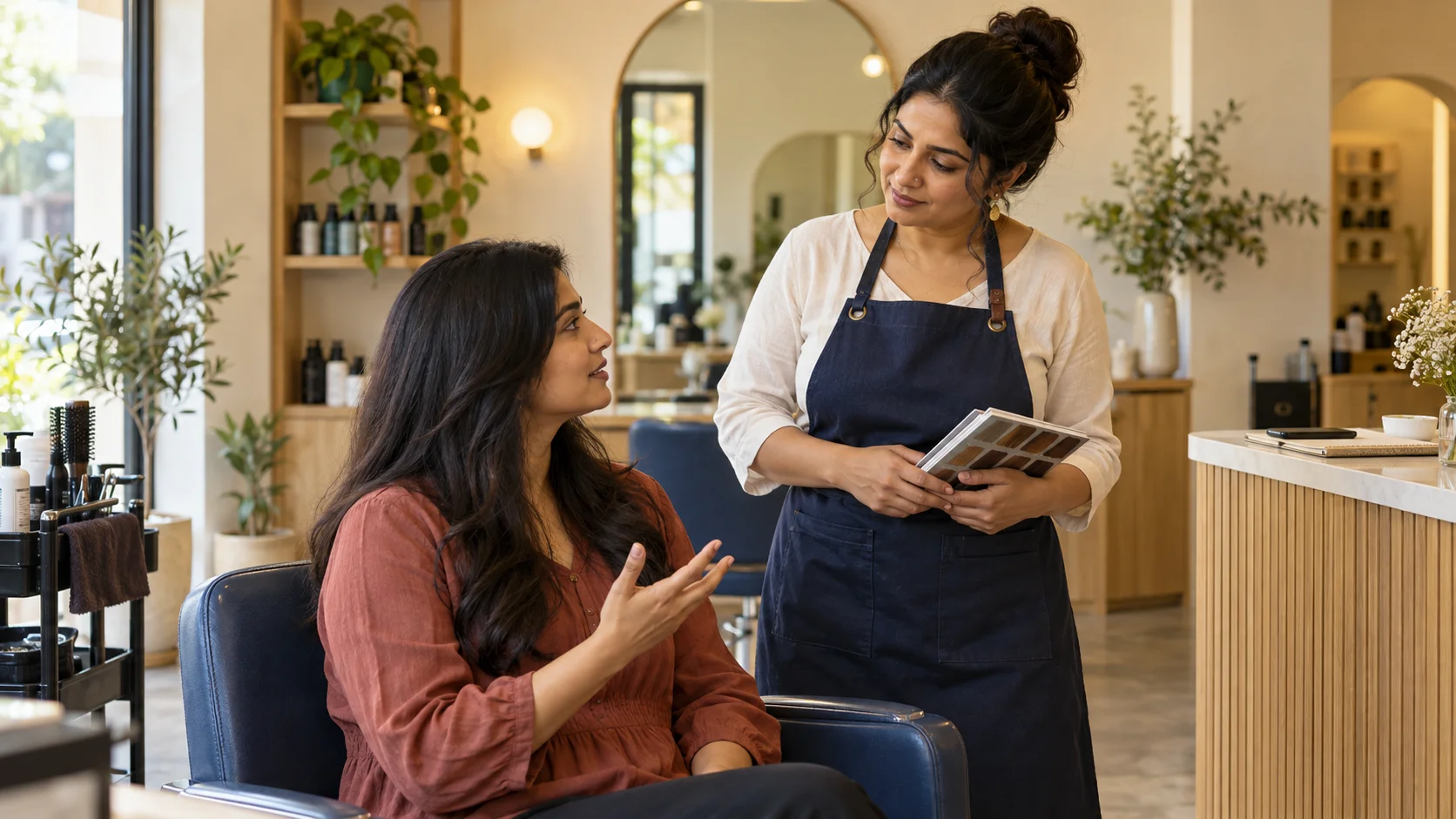
“Are you free at five?”
The receptionist sees an opening and says yes. A few messages later, it becomes clear that the client wants a longer service, a particular stylist and enough time to leave for an event.
The slot was available. The appointment, as the client imagined it, was not.
Salon appointment follow-up begins before the confirmation message. A few useful details at the enquiry stage help the client know what they are booking and help the salon reserve the right time.
Confirm the service, not just the hour
Ask what the client wants to book and whether there is a stylist preference. If the service needs a consultation before a reliable duration or price can be given, explain that early.
An illustrative response:
“I can check five o'clock for you. Which service would you like, and do you have a preferred stylist? That will help us check the right appointment length.”
A client asking for a standard haircut may need a quick answer. A more involved colour request may need the stylist's review. The conversation should reflect that difference.
Keep professional assessment with the stylist. An automated chat should not decide whether a treatment is suitable or promise a result from a photograph.
Make the price conversation comfortable
Share the current approved menu price when it applies. If the price depends on the final service, hair length, product choice or another genuine factor, explain what affects it and when the total will be confirmed.
Do not hide uncertainty behind a very low “starting from” figure. The client needs to understand whether the quoted amount covers what they asked for.
Clarify any deposit or cancellation terms before they commit, using the salon's actual policy. If a client needs an exception, send the question to the person who can approve it rather than inventing a flexible rule in chat.
Separate a preference from a confirmed booking
A useful appointment record includes the service, assigned stylist where relevant, confirmed start time, expected duration, location and the agreed next step.
“Would prefer Saturday” is a preference. “Saturday at 11 is confirmed” is a booking. Make sure the customer receives the same status the team sees.
If availability still needs checking, say that. Two reception staff should not each think the other has reserved the chair.
A confirmation should prevent the next question
Once the salon has accepted the booking, send the details in a short message. For example:
“Your haircut appointment with the agreed stylist is confirmed for Saturday at 11 am at our main branch. Please reply if you need to change the booking, and we will check the available alternatives.”
Use the real stylist name and branch details in the final message. Include essential preparation only when it comes from the salon's approved instructions. Avoid turning a confirmation into an unsolicited promotion for another treatment.
If a client asks to add another service, recheck duration and availability. Do not silently extend the appointment into the next customer's slot.
Change the follow-up when plans change
These everyday situations deserve different responses:
- A client requests a new time. Record the request, check the alternative and confirm the revised booking. Retire the old reminder.
- A client misses the visit. Send a considerate check-in if appropriate. Ask whether they want another appointment, without embarrassment or blame.
- A stylist becomes unavailable. Explain the change and offer only alternatives the salon can deliver. Let the client choose.
- The service is complete. Stop appointment reminders. Any later service or rebooking message should have a clear purpose and permission.
A completed booking does not automatically mean the person wants every offer you send. Respect communication preferences, and follow the current WhatsApp messaging requirements when using that channel.
Follow up with context, not a generic discount
If a client is waiting for a consultation before deciding, the useful action is arranging that consultation. If they asked for a weekend opening, check the relevant availability. Repeated discount messages do not answer either question.
Keep the notes necessary to provide the service, but avoid adding sensitive personal details to a general sales record. Never reuse a client's photograph in marketing without their separate permission.
Connect the enquiry to the booking process
SHVYA's CRM, Calendar, Cadence and Workflow tools can support configured enquiry and follow-up journeys. Confirm how your salon's actual appointment source supplies booking changes; do not assume a connection to an existing salon scheduling system.
Begin with one service and one branch. Check that an enquiry gets an answer, a confirmed slot stops the booking invitation and a reschedule removes the old reminder. Then expand the process.
Book a SHVYA demo to work through your reception workflow. Bring your service menu and a few anonymised examples of appointment questions. The goal is a booking that makes sense to both the client and the person preparing the chair.